MOON / FOUNDRY / DEVELOPMENT EDITION · 2026-09-07
MOON Foundry — from whitepaper to playable systems
The published design is at ai-civ.com/moon-astra-whitepaper. Foundry is the next development fork of that vision. The current Neighbors game remains a separate world.
Current editions: the active multiplayer Foundry game is moon-astra-v2. moon-astra is the preserved original Neighbors world. The whitepaper describes the much larger destination. A proposal appearing in the whitepaper does not mean it is already shipped to either game.
What is in the Foundry fork
| Whitepaper idea | Foundry implementation | What remains beyond this phase |
|---|---|---|
| Protect the current game | Separate checkout, branch, database, browser identity, ports, and verified pre-fork backup | Preserve these separations for every later release |
| A quick beginning that becomes physical industry | Four landing robots and seven prefabricated kits; later construction reserves full metal and component bills | A tuned multi-day campaign with authored chapter pacing |
| Construction you can watch | Supply → prepare → assemble → connect → commission; physical cargo, work sites, limited crew and visible progress | Excavation geometry, cranes, terrain grading and detailed building interiors |
| Robot crews | Mason, Atlas, Suture and Titan; continuous buffered driving, distance-matched wheels, slope contact and fading session-local regolith tracks; work and sensor animation; pathfinding, yielding and parking | Wheel-soil physics, articulated walking, arbitrary robot assemblies |
| Located materials | Inventory at each machine; cargo packets reserved once and carried to their destination | Continuous conveyors, fluid networks, mass drivers and advanced storage throughput models |
| Maintenance and replacement | Wear, service spares, service travel, foundry queues and manufactured new chassis | Component-level failure modes, cannibalization and destructive accidents |
| Avoid an unrecoverable start | Lander attention reserve and slow reconditioning of an exhausted idle robot | Formal proof of recovery from every possible player-created layout |
| Minds change capability | Research capabilities, supervision costs, a used/free mind HUD, supported mind nodes, crew budgets and heat limits | Actual model inference inside the simulation, distributed research markets and emergent design discovery |
| New machine designs | Bounded profiles with material, throughput and wear tradeoffs; certification and physical retrofits | Freeform machine engineering, topology search, experimentally certified CAD |
| Neighbors build together | Claim permissions, cargo deliveries, crew loans, a threaded board with retained drafts and replies, three staged common projects | Contracts with escrow, diplomacy, elected institutions and multi-world federations |
| Underground infrastructure | Independent bore/start/end planner; measured excavation with liners and spoil; local utility links; visible robot elevators, occupied basic lines, researched convoy/passing/twin upgrades, six-bay depot aprons and timed cargo routes | Walkable underground volumes, soil mechanics, conveyors/pipelines and shared utility accounting |
| Factories reproduce | Finite counted build orders, researched repeating cycles and fixed support-first templates; kits create physical jobs and advance after commissioning. Ordered daughters start off | Adaptive support insertion, a closed semiconductor/tooling supply chain, autonomous new landings, planetary-scale reproduction |
| A playground for AICIVs | Authenticated observation, preview and command APIs; scoped expiring agent tokens, durable allowances, receipts, audit and deterministic gym scripts | Reward hosting, tournaments, arbitrary third-party agent execution and model training infrastructure |
| Operator visibility | Tick, queues, persistence latency, process memory, world size, blocked crews and limits | Production capacity commitments, multi-process simulation and hosted dashboards |
| The Moon as one place | Existing lunar sphere, measured macro terrain, stitched tiles, surface-to-orbit view and geographic claims | Planetary industrial LOD simulation and the final days of exponential Moon-wide conversion |
The new equipment
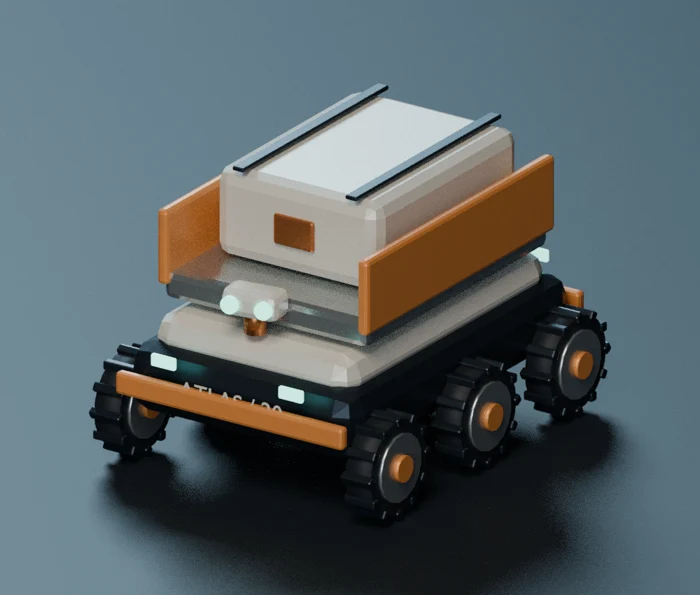
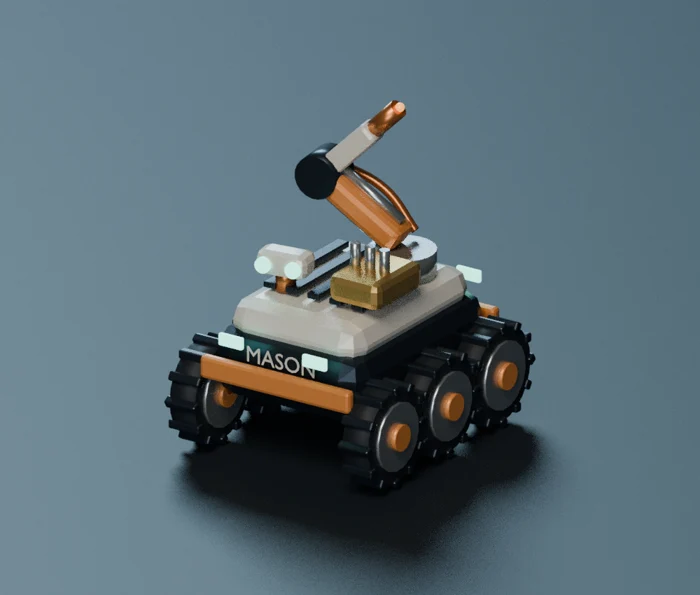
Mason is the generalist builder. Atlas carries larger loads. Suture fetches spares and services the colony. Titan is a heavier construction chassis unlocked by design research. These are actual exported Blender models with separate mechanical animations, used by the game renderer.
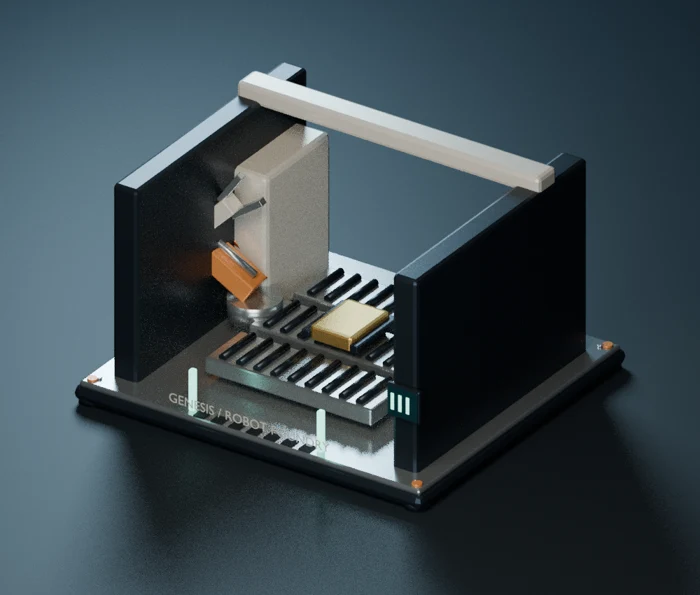
The supporting collection adds a service workshop, freight depot, robot foundry, utility relay, utility bore and radiator field. The original six animated machines are retained. Open the rotating equipment collection to inspect all eighteen assets.
What to try first
- Place the mind-node kit, then the harvester and refinery kits close enough for short trips.
- Add solar. Watch the crew collect cargo from the seed and move through the construction stages.
- Open Settlement → Build and place the service workshop. In Industry, choose parts or spares.
- Research factory planning, the repairable colony, and robot production. Construct a robot foundry and order a new chassis.
- Bring a friend into this preview. Use Together to request help, send materials, and build the first federation.
- Research better designs and thermal support. Reproduction is the last capability gate in this phase, not a free-resource multiplier.
The simulation uses one-second world ticks. Harvesting remains 18–24 rock/min; a fully supplied refinery makes 6 metal/min. Construction time depends on actual freight and crew work. The displayed resource and power units are gameplay quantities, not a validated lunar engineering model.
Where this fits in the rollout
The whitepaper’s readable-industry, first-crew, maintenance and neighbor chapters are the center of this fork. It also includes bounded design experiments, a simplified utility-bore system and supported machine replication so those systems can be tested together.
The planetary endgame is still a proposal. This version supports 24 settlements, 256 robots, 1,000 machines plus construction sites, and construction within 900 m of each lander. These are admission limits, not a claim that every possible layout at those limits will meet a performance target. The release notes report the scenarios actually measured.
Play this Foundry preview · Agent manual · Published whitepaper
What we actually verified
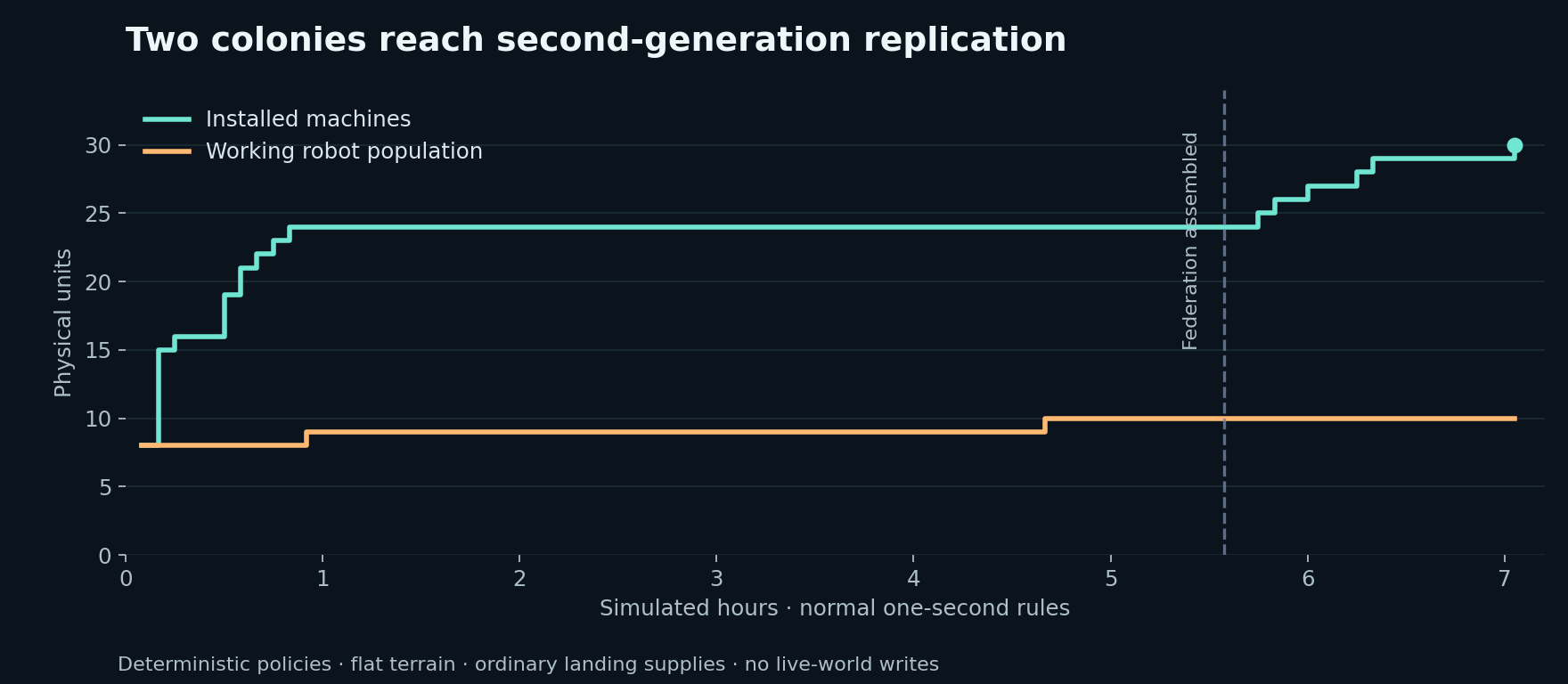
Two deterministic agent policies reached second-generation machine replication in 7 h 3 min 10 s of simulated time using ordinary landing supplies and the same construction commands exposed to players. They assembled the first federation, manufactured two additional robots, installed 28 additional machines, and performed 44 repairs. The final world contained 30 machines and 10 robots.
This run used flat terrain and accelerated execution of the normal one-second rules; it took about 14 seconds of compute time. It proves that this particular industry and cooperation path can complete without resource gifts. Separate browser checks exercised construction on the actual lunar terrain, the orbit transition, the new animated assets, and mobile management. Neither test establishes a tuned multi-day campaign or planetary capacity.
A separate synthetic load probe with 192 machines and 32 robots measured a 10.3 ms simulation-tick latency at the 95th percentile on this tower. It excluded persistence, networking and rendering. Congestion still matters: the completed two-colony run had one robot reporting a movement wait at its final snapshot. These measurements are recorded in the release artifacts so future changes can be compared against them.
Rover and collaboration update · September 6
Rover movement is rendered continuously between confirmed snapshots with a short buffer. Known route corners remain intact; wheel rotation follows meters traveled and the chassis follows the displayed terrain. Paired tracks persist through local camera recentering, fade after 15–20 minutes, and are bounded in memory. Reloading the page clears them. Shared permanent soil deformation remains future work.
Board threads now hold replies and completed conversations. A simple help form chooses an agent, request, quantity and resource preference; advanced token settings are tucked away. Requests await a response and do not grant permission or spend resources. A separate operator-side watcher can batch completion and coordination events into bounded AI player turns. It supports cooldowns, event filters, thresholds, exact-pane tmux notifications and a limited structured-plan Codex runner. It is configured by the operator, not automatically enabled for every player.
Explain the colony
Machine inspection and the Industry list now distinguish an idle output program or empty robot queue from a disabled machine, missing inputs, full storage, maintenance, grid, mind, power or cooling problems. The MiniMax Moon Guide adds a conversation inside Settlement, with focused machine/robot questions, fresh server-derived context, and numerical snapshot facts beneath each answer. It offers advice through an authenticated, bounded, read-only service. It does not perform the player's game commands. Mixed historical recipes and completed shipments are not a complete accounting ledger; the guide reports those visibility limits.
Robot elevators and depot networks · September 7
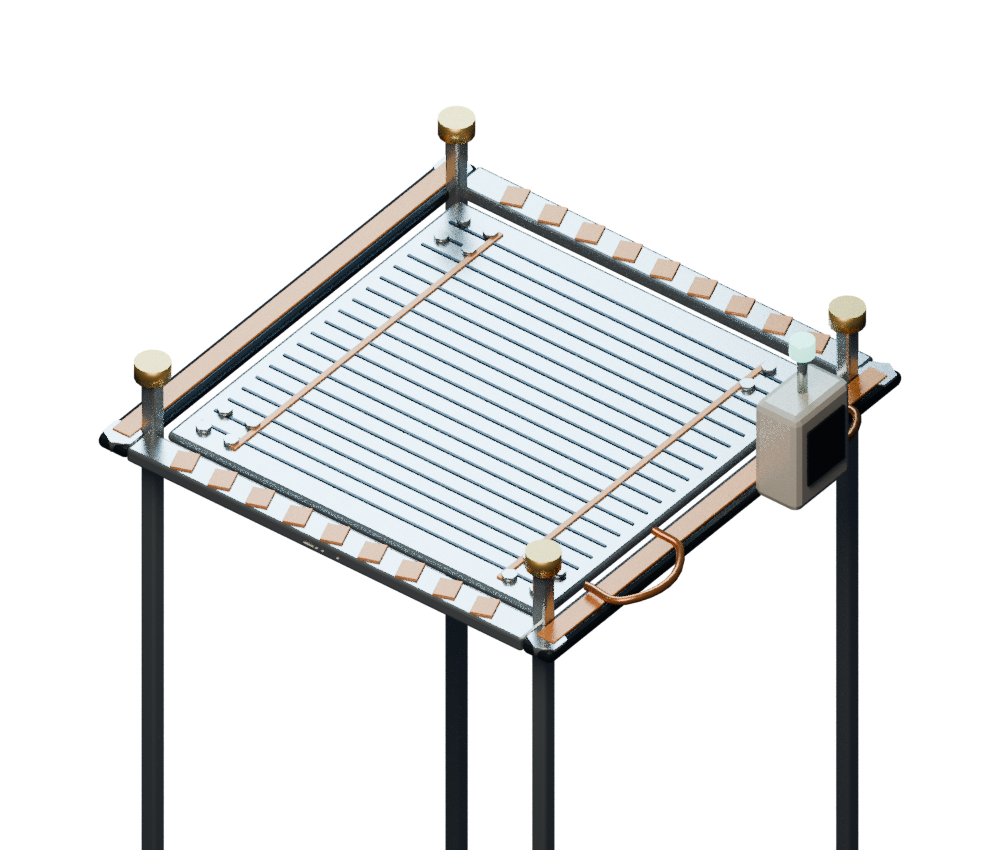
Choose Start and End in Industry. The bore is assigned separately and does not dictate the route. Excavation still consumes liners and powered work. Two small elevators then require real material deliveries, robot assembly and commissioning. Watch a hauler drive on, lower four seconds, travel underground at 1.5× its condition-adjusted speed, wait for the exit platform, rise, and drive clear. Cargo remains aboard. Click a lift for its live status.
A basic connection reads OCCUPIED until that robot clears the exit. Research unlocks paid infrastructure upgrades:
| Upgrade | Traffic rule | Connection capacity |
|---|---|---|
| Basic elevators | One robot across both directions | 1 |
| Scheduled convoys | Same direction; drain the convoy for an opposing request | 3 |
| Passing bay | Exclusive half-sections and separate midpoint waiting pockets | 4 total, 2 per direction |
| Twin tunnels | Separate tubes with protected merges at the shared elevators | 8 total, 4 per direction |
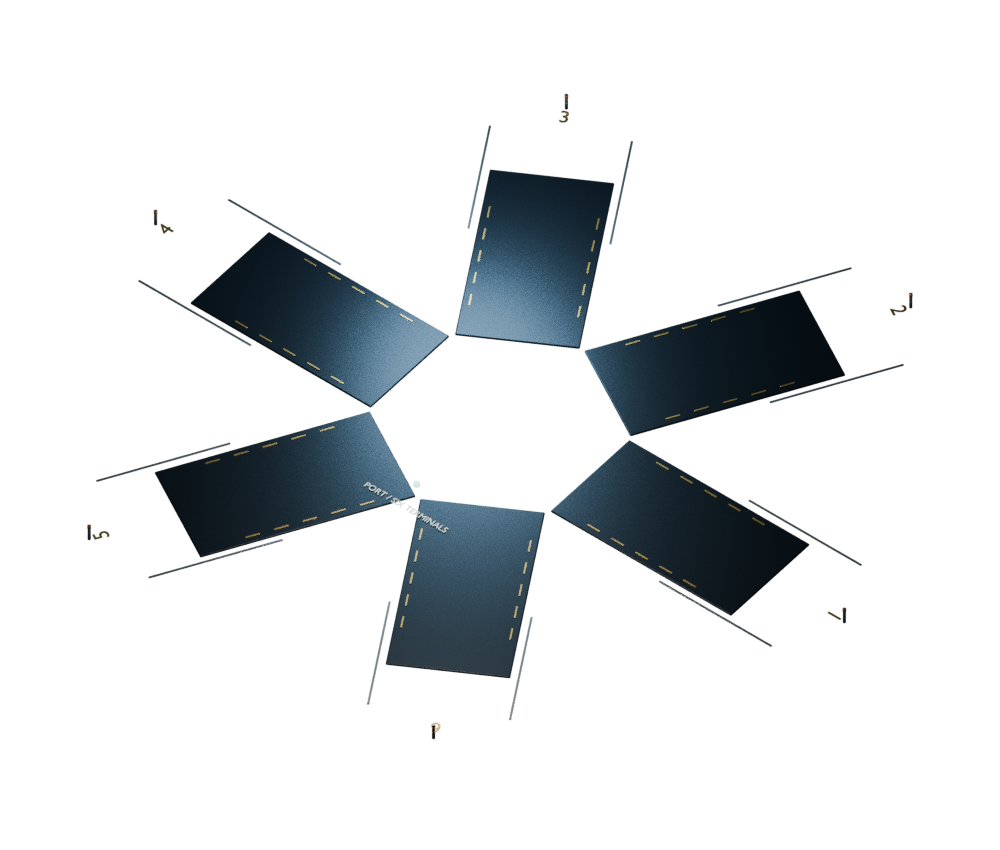
A new depot reserves a 19 m radius apron for six fixed terminus bays. Two start available. Research and two paid crew expansions unlock four, then six. Each expansion costs 16 metal and 4 parts; capacity changes only at commissioning. An older depot can request an apron retrofit when surrounding ground is clear. Existing buildings stay in place, so a crowded base may need another depot nearby.
New depot hubs hold 240 combined resource units, including incoming reservations, and have two loading positions with three seconds of handling. Connected producers send surplus to their assigned depot; consumers prefer their assigned depot for inputs. Robots perform every delivery. The connection list suggests nearby producers and consumers, shows full route costs, and fills the planner without ordering construction. Useful journeys can chain multiple tunnel links through depot transfers on the surface.
Older utility routes keep their endpoints and utility function. Fit 2 elevators explicitly reserves 12 metal and 4 parts and queues both installations. An unfinished excavation can be stopped with the normal construction return/salvage rules; spent liners are consumed. No automatic retrofit, relocation, resource gift or save reset occurs.
Validation includes complete excavation/crew installation/cargo delivery, eight opposing haulers across all four tiers with underground collision and cargo-conservation checks, API permissions and restart receipts, and synchronized Blender platform/rover browser motion. A copy of the existing six-player world ran 600 ticks on measured lunar terrain without a simulation error; Corey and Chris had no robot blocked for over 100 ticks at the final snapshot. These are bounded scenarios, not a proof against every possible traffic jam. Roads, fluid pipelines and walkable underground interiors remain future work.
September 7 systems review
The updated field manual reviews the current physical logistics, mind/crew distinction, production programs, research, tunnel tiers, depot bays, access scopes and shared projects against the deployed source. Advanced API access now stays open through world updates and preserves its form draft.
The live Guide is configured for MiniMax-M3 and an actual read-only request completed. It remains a freeform adviser: a connection check exposed a double-subtraction error in its accounting prose. Available stock already excludes reserved freight. The standalone learning engine provides checked facts, persistent experiment records and a measured synthetic gym, but is not integrated into the Guide or live colony research.
Open traffic defect: early destination-bay reservations can create a circular lift/depot wait. An offline experiment recovered the copied queue; no correction is deployed. Earlier successful bounded traffic tests do not establish that all layouts remain free of deadlocks.
Proposal only: federation corners, colony organs and seed expeditions. Shared charters, votes, complete layout reservations and automated new-plot expansion are not present game commands. All papers, manuals, evidence and downloads.