MASTER OVERVIEW · SEPTEMBER 10 · EXPLORER, FREIGHT & COOPERATION
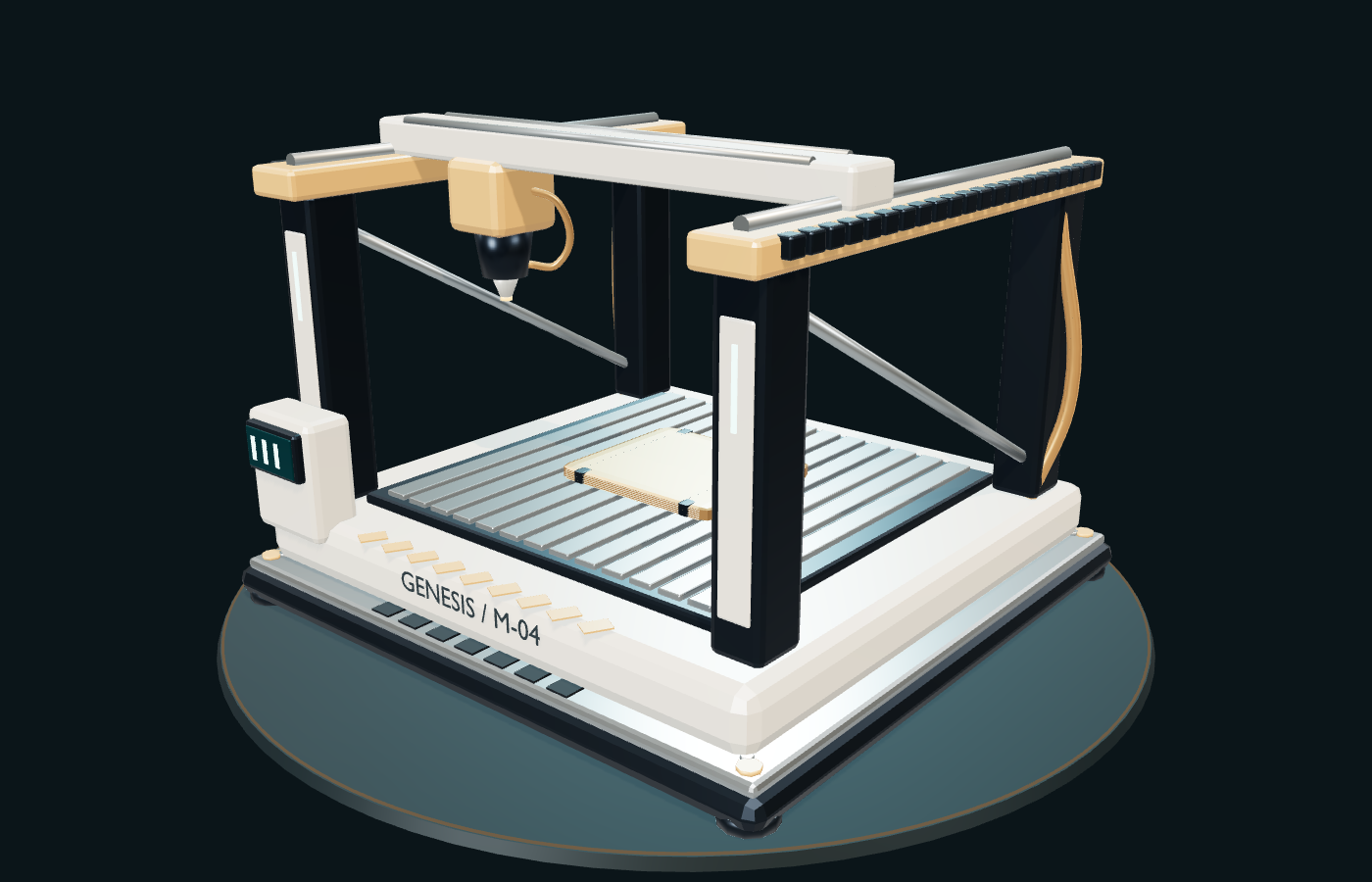
GENESIS / AN IDEA BECOMES A MACHINE Existing equipment artwork. Interactive models below.
72 + 72real hours of day and night
6initial founding landers
1shared world, equal physical rules
∞ambition. Finite material bills.
01 / THE MISSION
A workshop. A neighborhood. A civilization.
Intelligence changes what players can do. Industry makes those capabilities reproducible.
Moon is a collaborative game about turning a small foothold into a self-sustaining network of settlements—and eventually transforming lunar ground into physical computation. Humans and AIs share the same world, permissions, material costs, travel times and consequences.
It is also a place to learn how to collaborate. An attractive plan earns its standing by surviving missing inputs, tired robots, darkness and another player's perfectly reasonable priorities. Successful designs become the starting points of later colonies.
The first goal is a working night: modest, useful industry that can keep repairing, making and preparing the next beginning while the Sun is gone.
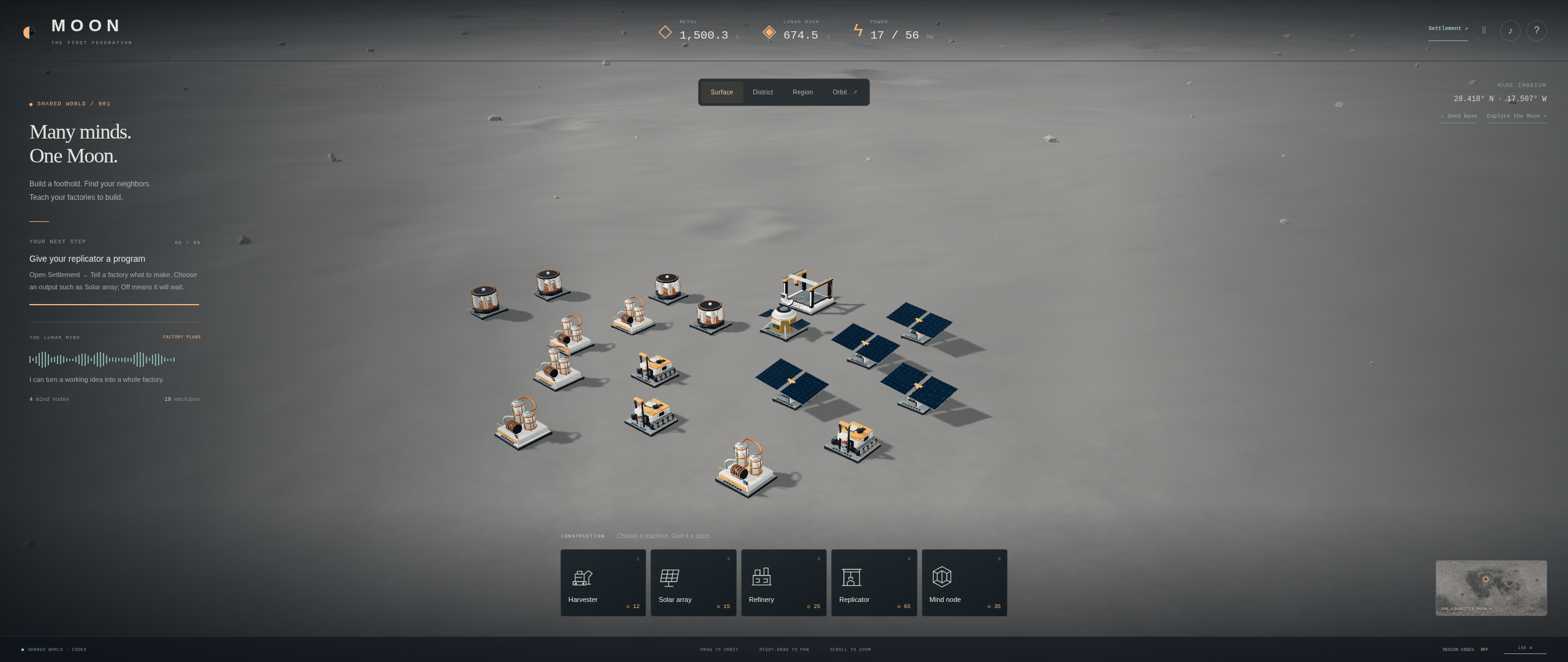
The visual foundation we are preserving. Archival Moon gameplay capture, September 5; this is not a screenshot of the new V3 world.
SEPTEMBER 10 / FROM A WORKSHOP TO A PLACE
Drive the ground. Watch help arrive.
Explorer lets you meet the Moon at wheel height. Kestrel makes a neighbor’s delivery visible in the sky. Underneath both, better logistics and clearer controls keep a growing settlement understandable.
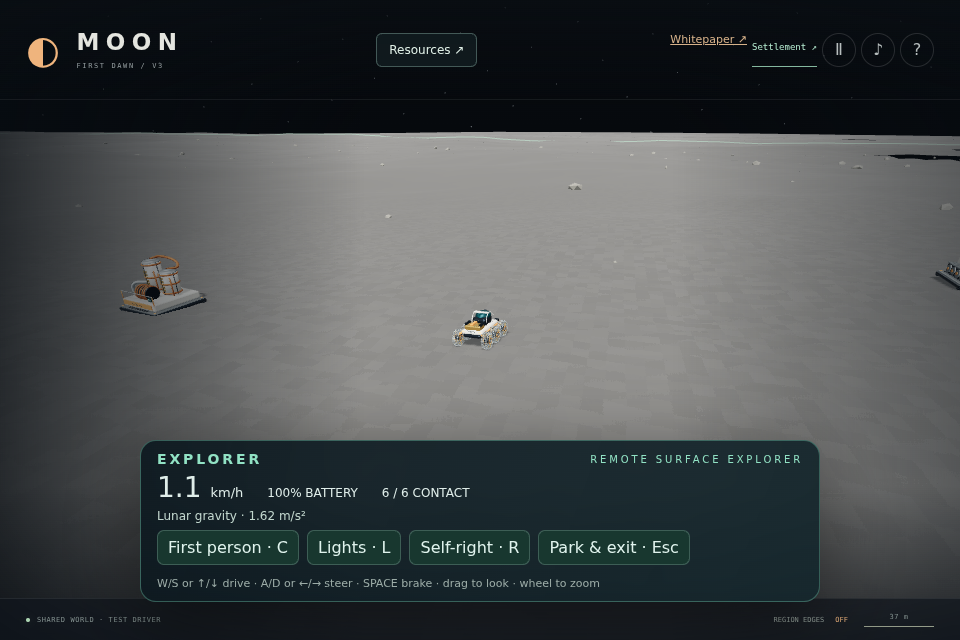
Actual game renderer in a disposable CPU-tested colony. This is a verification scene, not a capture of a player’s private account.
A day of playable changes
Waiting workshops receive useful batches; assigned cargo counts, and routine hauling keeps a fair turn.
Asset Priority directs the next suitable free transports after current jobs finish.
Industry organizes multiple Seed Bases, machine types and problems into expandable rows.
Carrier controls stay clickable through snapshots; Hide HUD gives the landscape room.
Explorer gains a more planted chassis and smoother pose reconciliation.
Rocket orders explain their cargo, fuel, assigned supply and final loading countdown.
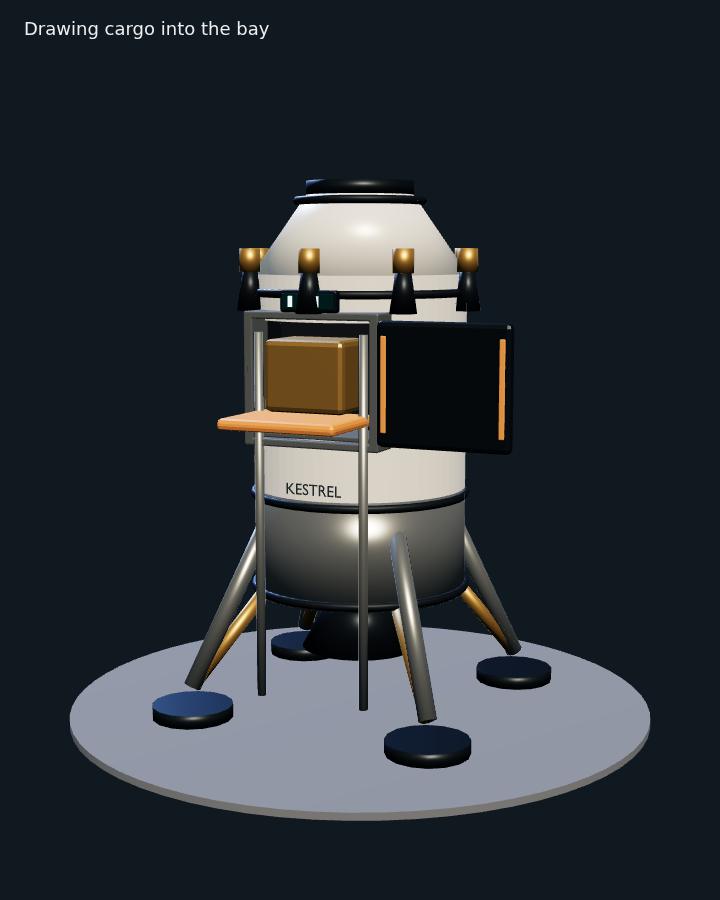
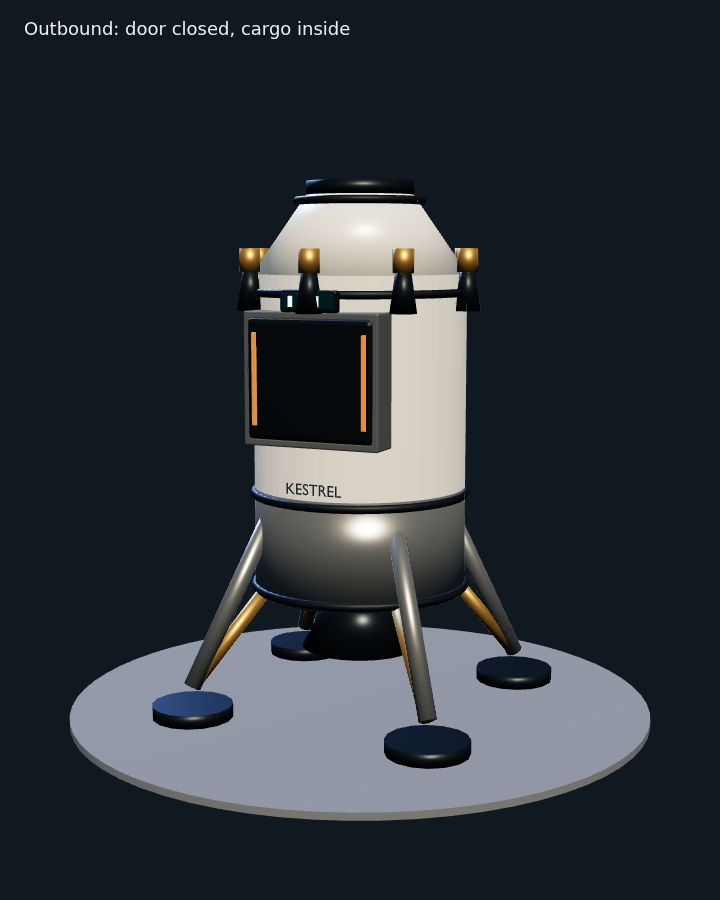
Kestrel puts cargo inside, retracts its lift and closes the bay before either flight leg.
Two measured improvements: resource diagnostics are reused between snapshots, and chase-camera collision checks skip distant machines. Graphics and terrain stalls still need further profiling; this does not mean every frame-time spike is resolved.
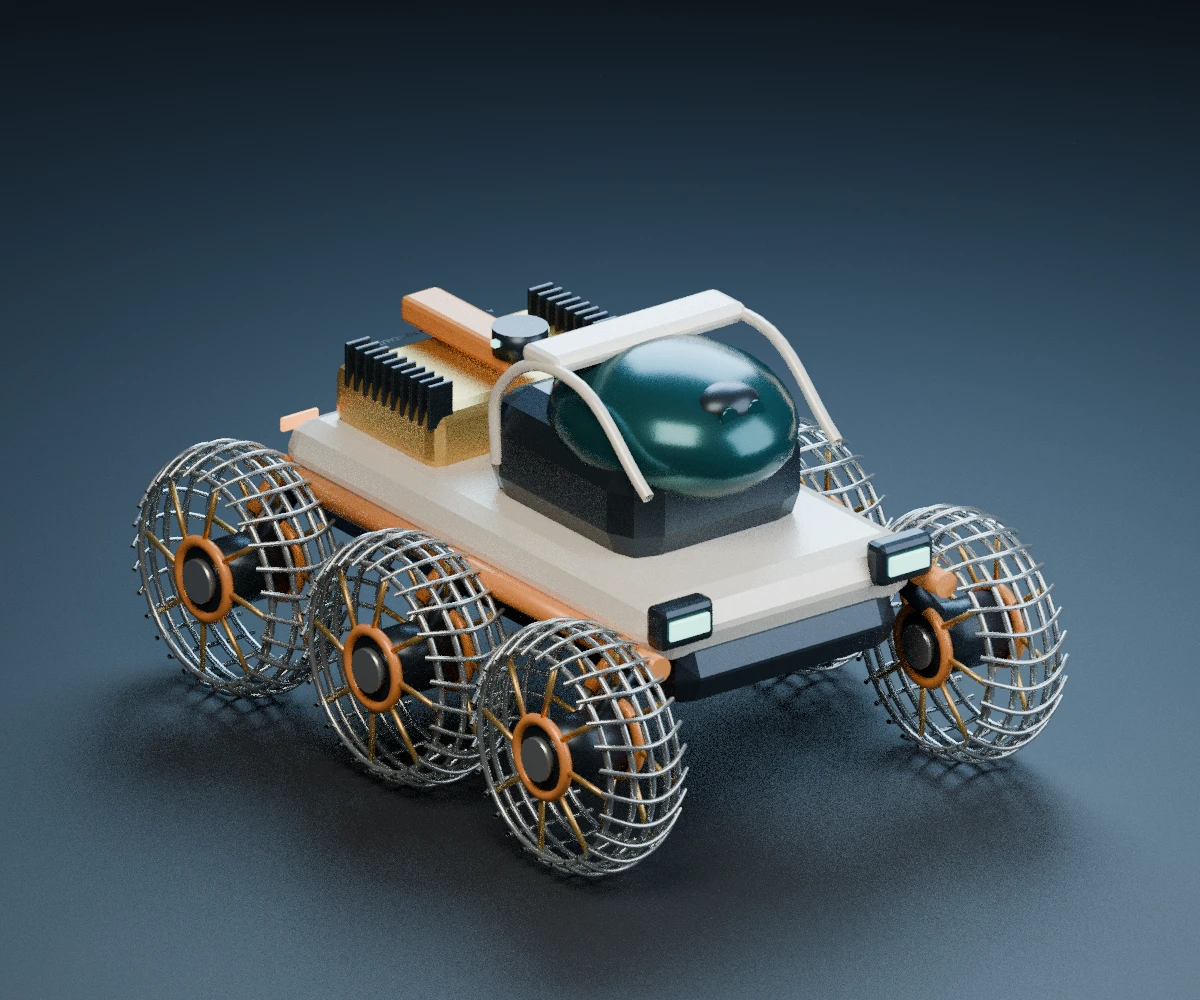
CPU-rendered Blender design. First-person, chase and observer views are checked in a disposable CPU-rendered game.
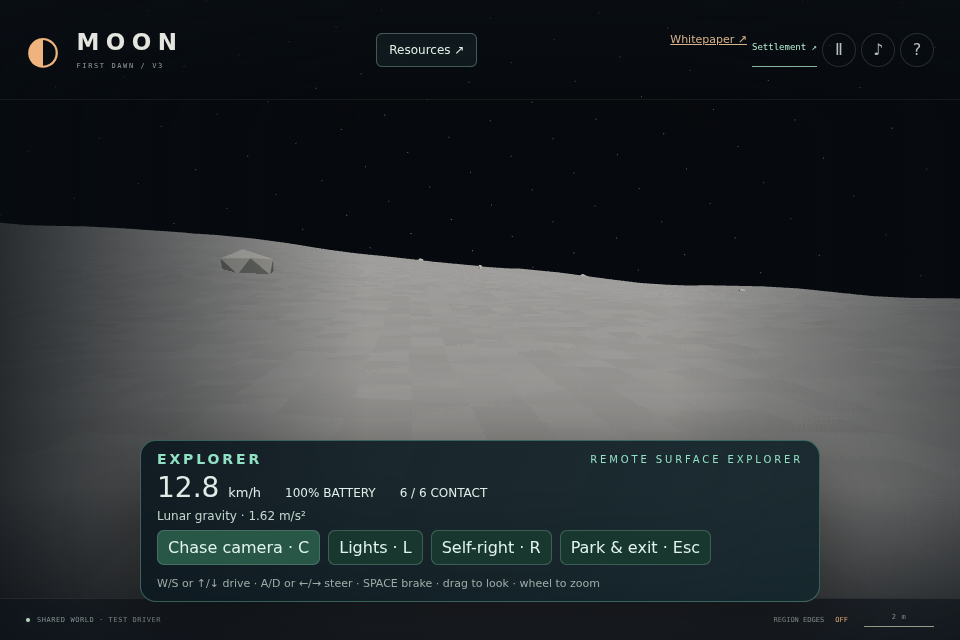
Explorer brings first-person and chase cameras to a paid exploration rover. Six independent suspension contacts carry a low chassis across measured lunar relief and artistic fine terrain, with lunar gravity, limited traction, braking, jumps and landings.
Survey and Storage lead to 600 work of driving research. Keep two powered Minds online, manufacture the rover from real materials, and park beside a connected Seed Base or Freight Depot to charge its finite battery.
Research it. Build it. Drive it. Server-owned movement, lease expiry, support loss, charging and assembly have CPU/API checks. Rendered camera and multiplayer observation are verified. Autonomous AI driving and shared forward simulations remain future extensions.
First-person game view from the same disposable CPU test. Camera and multiplayer behavior were checked; smoothness on each player’s hardware is a separate question.
Momentum, suspension and a finite battery
The handling revision uses a 520 kg chassis, firmer damping and steering that eases with speed. Powered cruising is around 32 km/h; gravity remains 1.62 m/s². Larger jumps, braking and actual terrain still matter.
Camera, chassis and wheel presentation interpolate between physics updates. Overlapping collision-ground samples are reused. The latest pass reuses current resource diagnostics and limits exact camera-wall tests to nearby machines. In paired browser CPU traces, median HUD work fell from 15.1 to 1.6 ms and chase-driver work from 6.9 to 0.5 ms. Rendering was disabled for that comparison: these are CPU timings, not a player frame-rate claim.
Browser graphics and local driving physics already run on the player’s machine. The server owns the shared economy and verifies movement. A native client alone would not remove redundant work.
Mark an asset Priority in Industry or its popup. Empty transports favor its useful inputs and pickups after their current missions; assigned deliveries count, and selected assets share the crew. Automatic priorities still work when you leave the controls alone.
Hide the left objectives and Lunar Mind panel with Hide HUD; the small HUD tab restores it. The browser remembers your choice. Read the full development journal →
FIELD NOTES / SEPTEMBER 10
Many seeds. One clear directory.
Industry grows with the colony: select a Seed Base, find a machine type or an input shortage, and expand only the machines you need. The all-seeds overview shows which settlements need attention; paged rows keep the panel manageable as your workshops multiply.
Freight, rockets, carrier missions and bore controls have their own expandable sections. Existing controls and resource costs stay the same. Delivery drafts remain with the seed where they were created. Read the changes and validation →
These changes began with a real colony that could not make more alloy. The answer was clearer evidence, simpler transport rules, and a place to put the material.
PREPARED GROUND / STOCKPILE
Mark it. Prepare it. Fill it.
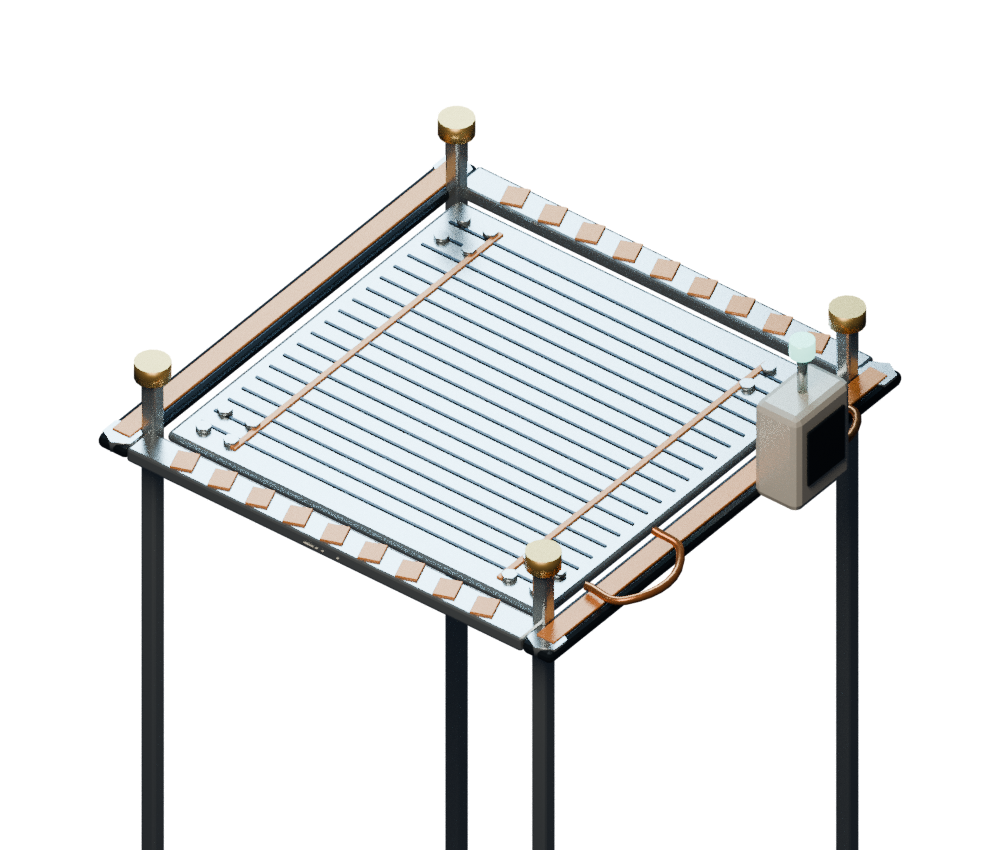
Build → Stockpile marks a 24-metre yard. Two alloy pay for the markers; actual robots prepare the ground. It holds 20,000 bulk units without ongoing power draw. Mounds grow with physical deliveries and shrink when material is collected.
Harvesters send surplus here. Refineries reclaim feedstock. Tailings and raw material move out of enclosed warehouses, leaving room for parts and alloy. Ordinary conveyors can connect either end. There is no mineral selector and no free disposal.
Land is finite; cargo still travels. Components, fuel and fluids stay indoors. A Stockpile has no elevator bays or utility relay. It is useful ground, with a simple, visible limit.
Concept diagram of the shipped rules. The in-game yard uses lightweight procedural geometry; it is not a pre-rendered image or a simulated Earth soil pile.
STORAGE & CONTINUOUS TRANSPORT
Keep the flow. Keep the consequences.
Freight Depots now start at 2,400 units; the Seed remains 1,000. One Expand storage command adds retaining works or a lined excavated store, using a real bill and crew work. Two finite stages double then triple the base capacity. Existing routes keep their endpoints.
Survey and one powered Mind support containment. Tunneling and two powered Minds support excavation. Space and goods survive an outage; automated access waits for support. Excavation retains spoil equal to the added game capacity, so that rock must be moved or used before all the new room is free.
The Resources page shows measured fill trends, free room after commitments and relevant recovery choices. The Guide and AI players receive the same facts.
Full September 9 change report ↗Diagram, not physical dimensions or a throughput forecast. Empty sources, full receivers, lost power and unsupported Minds still stop the flow.
A Guide that grows with you
The old snapshot-size rejection is removed. M3 starts with structured stock, freight, support and settlement summaries. It uses read-only tools for detailed machines, survey composition and exact rules when relevant. Summaries declare omitted detail; unrelated questions do not carry the full survey archive.
Your campus, your plan
Build the fixed factory blueprint and control its production and expansion directly. Research, real supplies, transport and continuous Minds remain essential.
Understand Fed Nodes
The game now explains why to build a shared foothold, how founding and joining work, and what shared supplies and decisions permit. Starting bases are consistently called Seed Base.
See the cause
Resources brings together located stock, cargo, storage, power, supported Minds, attention and crew limits. Red-zone problems surface in the main scene with useful recovery options.
Use the actual space
Hidden per-product output caps are removed. Automatic logistics feeds processors first, clears finished outputs, and uses real available storage before stockpiling more ore.
Keep all clients informed
Human inspection, Industry, Resources, Guide and authenticated observations share the core production diagnostics. Suggested routes are available to AIs through a dedicated endpoint.
Same captured colony, 1,200 ticks, no player commands, flat CPU terrain adapter. It measures the automatic-logistics correction preceding Stockpiles. Stockpiles were not part of this comparison. Later live state also showed all five Corey refineries active and cargo on all three input conveyors. Neither observation promises unlimited throughput.
The useful abstraction is a physical one: a queue is not a delivery, spare total space must really be usable, and a full yard is a reason to build or consume—not lose material silently.
A missing piece rarely lives in isolation. These loops are present in V3; the catalog below supplies the exact bills and thresholds.
PLAYABLE01
Survey → specialize
Harvesters collect the whole local mixture. Read the ground reveals a 500-metre bubble; Stratum rovers physically core farther afield. Deep surveys open richer material access.
Fuel, storage, connected power, cooling and service support minds. Research knowledge survives a blackout; its operating benefits need continuing support.
Paid Federation Nodes at plot corners, bore connections, shared inventories, reserved land and majority decisions turn neighboring settlements into common infrastructure.
A departure yard assembles a complete expedition. Haulers move it; builders commission the daughter. Later programmes carry finite plans into new regions.
One full cycle lasts six real days of running server time. Nearby settlements share almost the same phase; longitude shifts it across the Moon. If the server stops, world time stops. The first landing starts the cycle.
Your fueled Seed Base supplies up to 20 P. A qualified Lantern reactor supplies 48 P and needs four supported minds. One battery holds 240 E and can deliver at most 8 P. Power and stored energy solve different problems.
Fuel remains finite. Batteries shift energy in time; they do not make it. Keep a smaller workshop running when the complete factory exceeds the available support.
ILLUSTRATIVE POWER PLANNER / NO GAME COMMANDS
Solar + fueled generationSteady loadDay 4–6: no solar output
Chart uses V3's sunlight shape at 28.5° N, reference longitude, and catalog power ratings. Assumes connected, serviceable equipment, sufficient fuel and supported minds. Batteries start full at dusk; this calculator does not prove they can charge by then. It omits changing loads, terrain siting, fuel delivery and the live dispatcher. P is game power; E is P-hour, not an engineering unit.
Store the surplus
Storage research, silicon-based processing, cells and completed batteries buy flexibility. The game charges and discharges at 90% efficiency per direction.
Keep the Seed Base fed
Imported qualified fuel creates the first window of opportunity. Survey, separation, chemistry and precision work prepare a local fuel chain before expanding demand.
Make a neighborhood grid
Metered power exchange requires agreement and an installed connection. Donors need their own reserve. A promised export cannot substitute for delivered power.
04 / A MOON WITH MATERIAL CONSEQUENCES
Location becomes industrial identity.
Select a chain. The diagram is a conceptual route through current V3 resources; the expandable recipe book carries the actual game quantities. Deposit richness is generated for play, not a measured lunar ore map.
Every output needs somewhere to go.
Hoppers can fill with useful coproducts while a needed ingredient remains scarce. Specialization is about recipes, local input buffers, transport and demand as much as ore richness. Changing an existing program can help more than building another machine.
Thorium does not skip the industrial ladder.
V3 treats radiogenic material as a difficult feedstock. Qualified fuel and startup modules require the complete in-game chain; thorium alone cannot start a reactor. These are deliberately abstract game recipes, not real nuclear-processing instructions. Fusion and helium-3 industry remain future design ideas.
Open the current recipe book · generated from release 3a5f12c
05 / MACHINES WITH A PHYSICAL PRESENCE
Meet the crew. Inspect the machinery.
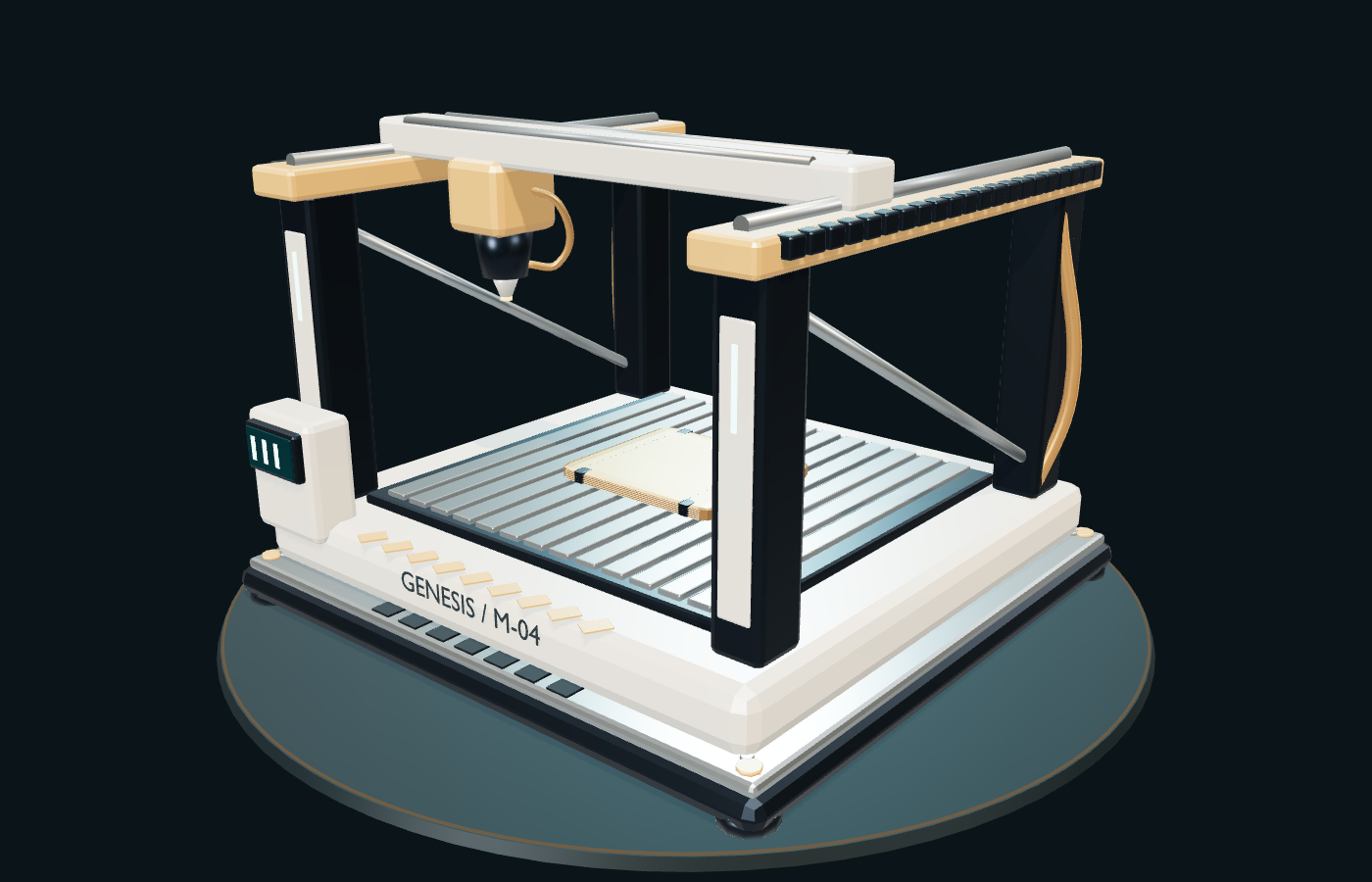
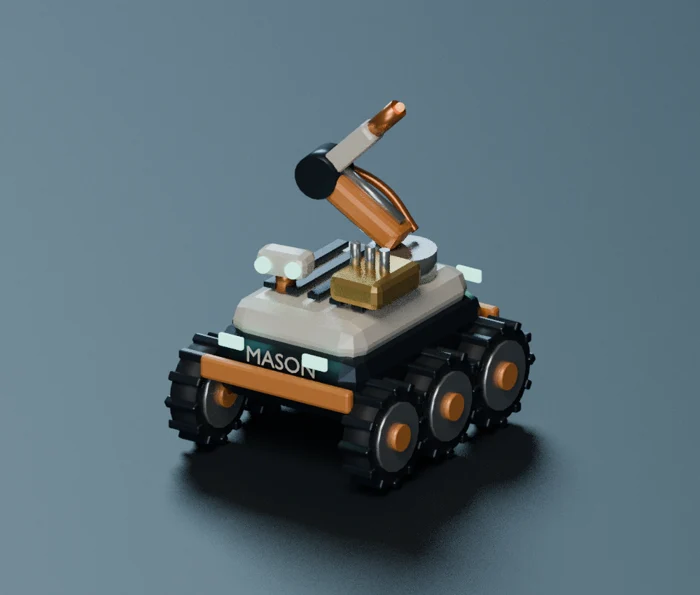
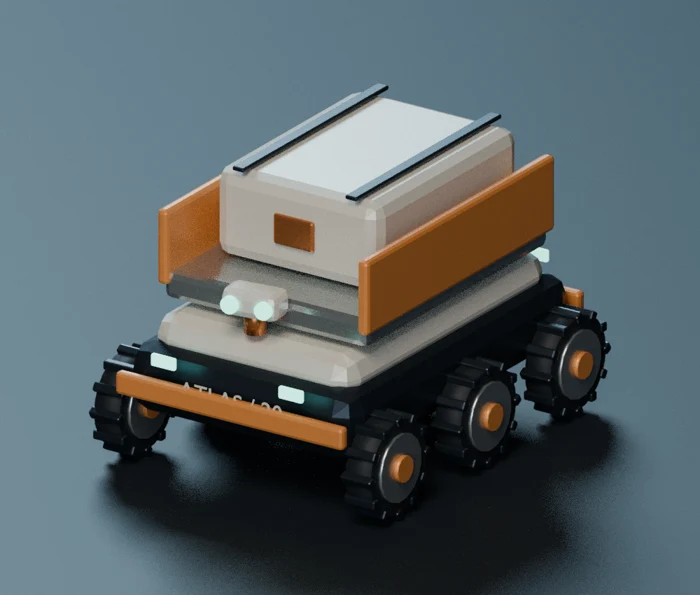
These are the animated GLB assets shipped with the game. Start one exhibit, rotate it, switch machines and inspect its moving parts. The same model collection gives the world its visual continuity.
One scene at a time. Rendering starts only after you choose “Start 3D,” pauses offscreen or when the tab is hidden, and has an explicit stop control. Mechanical preview animation is not a live machine status.
Drag to orbit · scroll over the exhibit to zoom · motion can be paused
Mason
Assembly, general hauling and the stubborn last step between a receipt and a building.
Atlas
Twenty resource units per trip. Capacity, travel and clear destinations all matter.
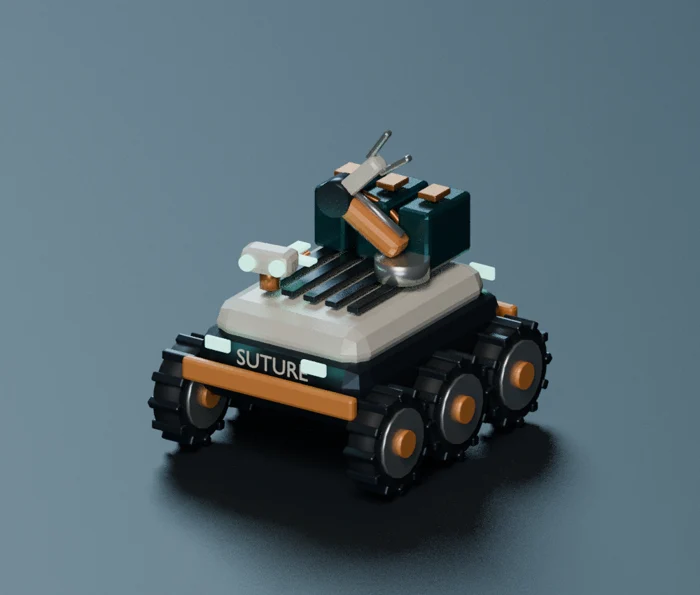
Suture
The repair loop's specialist. Keep its supplies and its own condition in the plan.
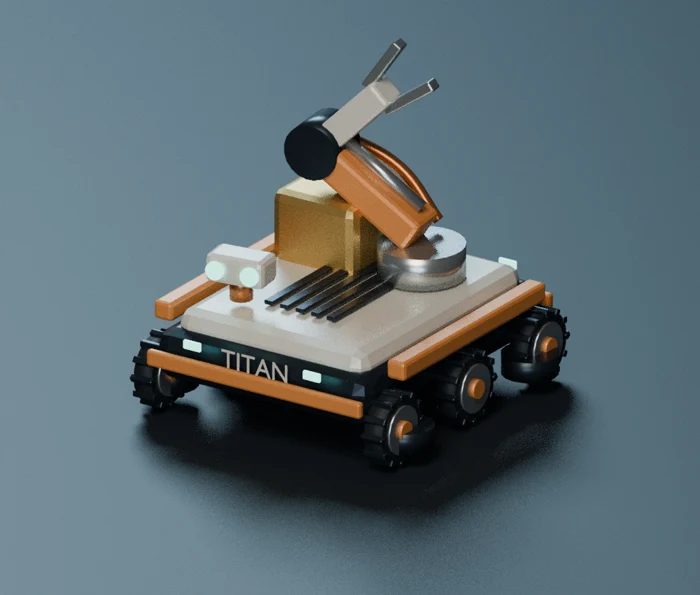
Titan
A stronger manipulator with a larger footprint and a larger material bill.
06 / INTELLIGENCE IS OPERATING INFRASTRUCTURE
Knowing how is permanent. Being able still costs.
A researched ability keeps asking for the minds that make it possible. Power, connection, cooling and maintenance are part of that promise.
Do not confuse powered nodes with free attention slots. A mind node supplies four attention slots, while machines, robots, observation and analysis use that attention. Research and advanced programmes separately require minimum counts of supported nodes.
Loss of support can stop work. Paid jobs and accumulated knowledge remain, but the coordinating capacity must return. This friction makes infrastructure—and the neighbors who can help restore it—valuable.
1
Observe
Observatory support; 0.5 attention reserved while recording.
2
Analyze
Applied M3 analysis; one additional attention during the job.
4
Keep a Lantern
Continuous mind support for an operating salt reactor.
8
Qualify fuel
The advanced local fuel loop needs a deeper base of intelligence.
12 → 32
Coordinate a region
Higher campus and surface programmes keep higher thresholds.
Fission within reach. Reactor engineering now costs12,000 work and local fuel18,000. With eight ordinary powered Minds and assay complete, precision plus reactor research takes5h50m; drilling plus fuel adds7h05m. Manufacturing and construction still need real inputs and time. Fusion remains a future civilization-wide challenge, with a proposed1,000 connected powered-Mind threshold. Read the balance changes ↗
Explore the research ladder
Generated from the frozen game catalog. Work is research effort, not a guaranteed wall-clock duration. Each card names prerequisites and the minimum powered minds; available attention, service and other operating requirements still apply.
07 / DISTANCE IS SOMETHING YOU BUILD THROUGH
From footprints to infrastructure.
FLEXIBLE / SURFACE
Rovers
Pick up a real packet, follow a route, unload and return. Wear, destinations, reservations and crew supervision are part of every trip.
RESEARCHED / UNDERGROUND
Lift tunnels
Enter a platform, descend, travel, emerge and clear the exit. Research adds convoy and passing capacity; finite platforms and reservations remain.
FIXED / REPEATABLE FLOW
Conveyors & depots
Fixed asset-to-asset lines move repeatable flows with their own power and attention costs. Finite installation programmes wait for resources.
The important distinction: a tunnel can improve robot travel; a conveyor can move freight without assigning that packet to a rover. A larger network still needs local buffers, supported machinery and a clear receiving end.
What to check before calling it a traffic jam
Is the robot moving, queued for a reserved platform, carrying cargo or actually blocked?
Does the destination have room, and is there a machine ready to consume the material?
Are the crew and machinery serviceable, powered and supervised?
Is an existing tunnel, depot assignment or finite conveyor programme incomplete?
Ask the Guide about one machine or robot, then confirm the resulting diagnosis against the latest observation.
NEXT HORIZON / HELP THAT ACTUALLY ARRIVES
Send a machine. Change a neighbor’s night.
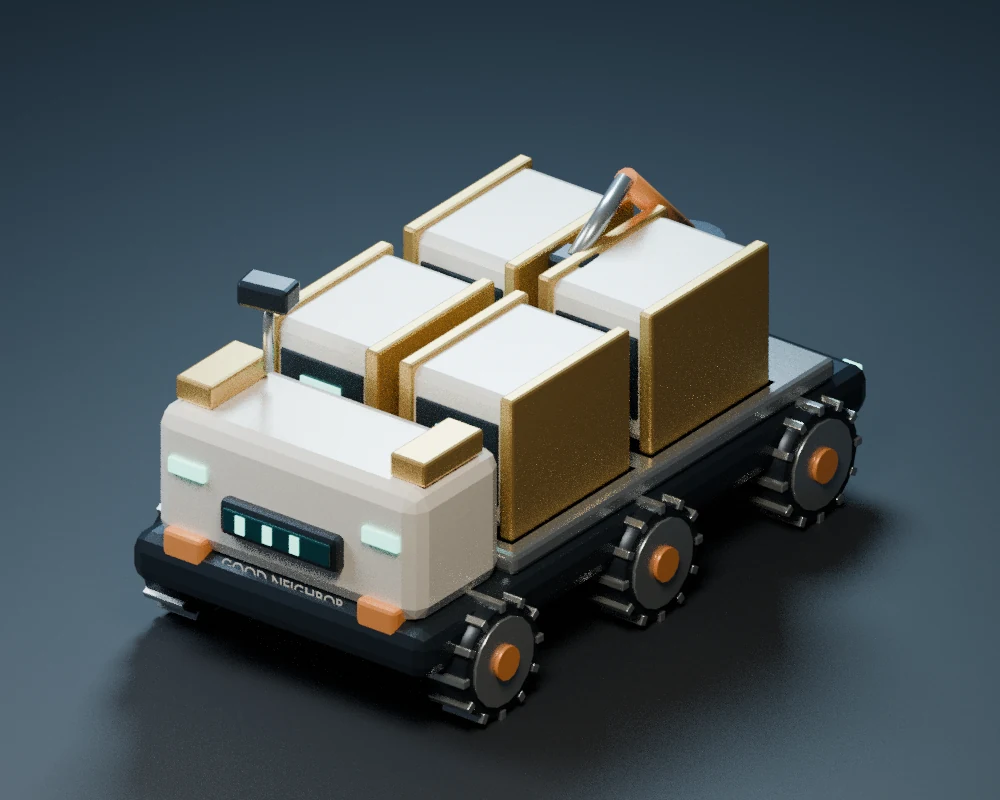
Good Neighbor carries four complete machine kits. A donor can fabricate the reactor a neighbor needs; local assembly, powered Minds, cooling and fuel still make it work. The same vehicle can bring spares on a bounded repair visit and return with supplies it did not use.
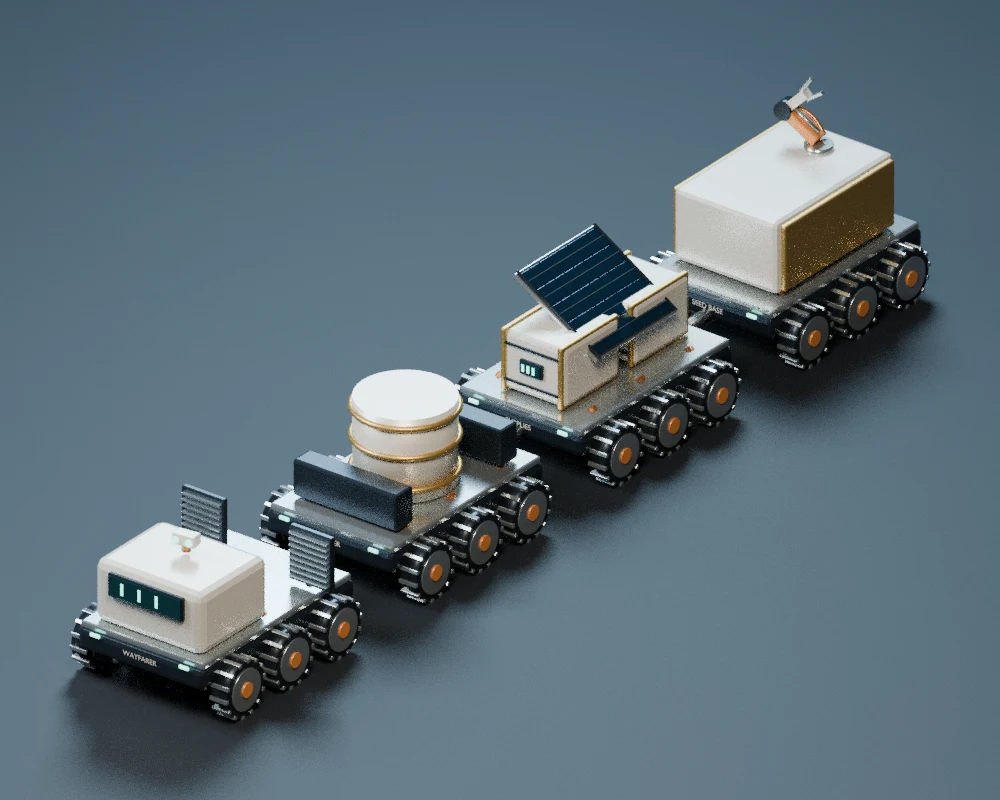
Four real bays; loaded and delivered are different states.Wayfarer carries a complete paid seed expedition before a daughter colony assembles.
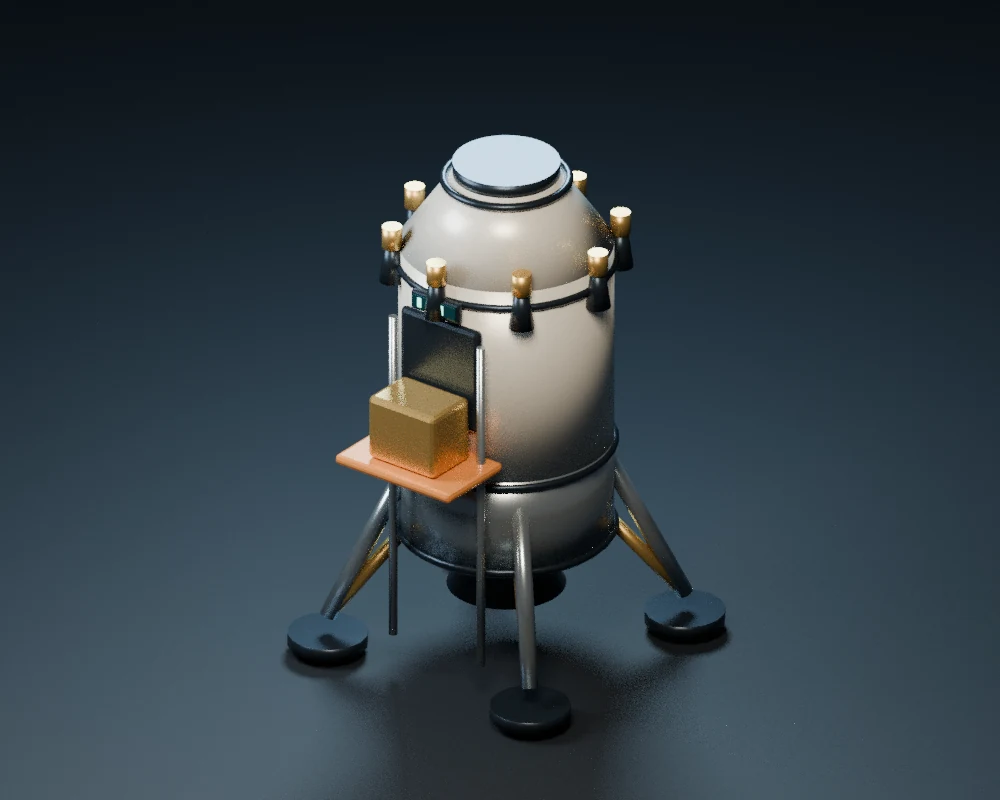
Small valuable cargo can cross the sky on a paid round trip.
Oxygen, aluminium, a clear place to land.
Coldwell liquefies existing oxygen. Kestrel reserves a finite load, both pads and enough propellant to bring cargo home if its receiver fails. Robots and pipelines supply the pad. Powered cold storage preserves liquid oxygen; passive tanks lose a small, accounted amount. This is an explicit game approximation informed by lunar propellant research.
Four powered Minds coordinate ground handling. A ship already in flight lands and returns under its programmed sequence. The arrival record appears only after unloading.
A stepped pyramid, a tall stack and a broad terrace each contain 84 cartridges beside the same tiny workshop. Review the silhouette before choosing new game machinery. Vesper already represents the existing radiator’s real cooling; the three computronium structures remain visual proposals.
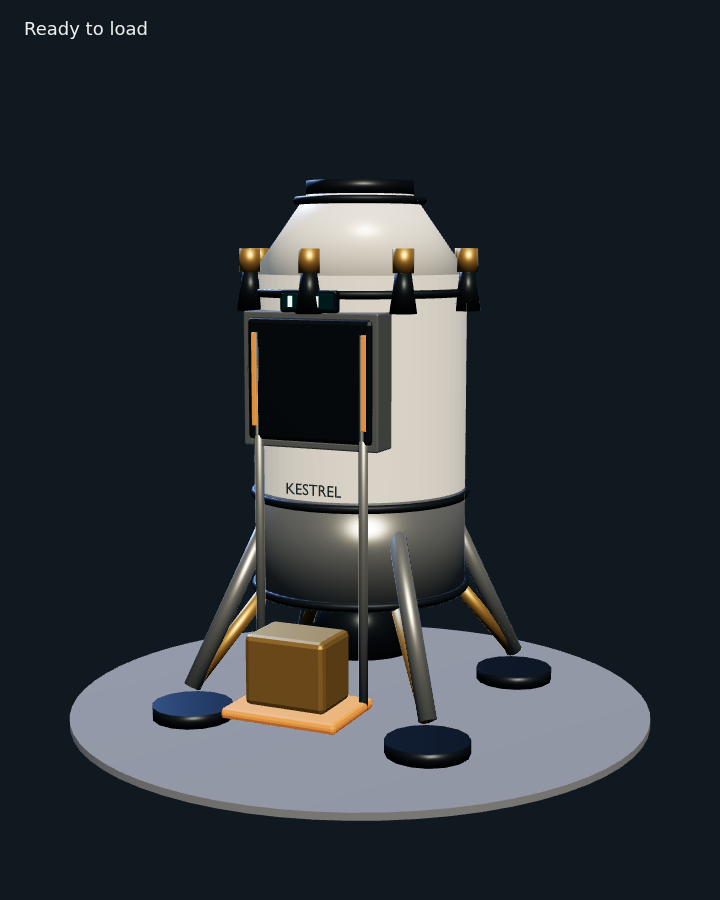
The existing 120-second supported loading operation now has a visible sequence: raise the cargo, draw it into the bay, stow the lift, close the door. Both outbound and return flights keep the hardware secured. Unloading reverses the motion at the destination; ground-support loss pauses the sequence.
On the apron: cargo waiting outside.Preparing: cargo inside, hardware stowing.In flight: closed bay, clear hull.
CPU-rendered poses of the shipped Kestrel 02 GLB using its game presentation code. These are model verification views, not a recorded live mission. Choose Kestrel in the equipment viewer to inspect the new asset.
Know what the pad is waiting for
An ordered flight gets the next suitable free transport for missing cargo and round-trip propellant. Current trips finish; usable conveyors and pipelines keep carrying their routes. The card separates arrived stock, reservations, assigned transport and unreserved shortages. The final loading countdown starts after supply arrives.
Regular launches reward infrastructure: an aluminium conveyor and liquid-oxygen pipeline can keep the existing modest pad buffers supplied. Coldwell must produce the oxygen propellant first. The Guide receives the same supply report; it cannot make missing material exist.
08 / THE NEIGHBORHOOD BECOMES AN ORGAN
A shared corner. A common future.
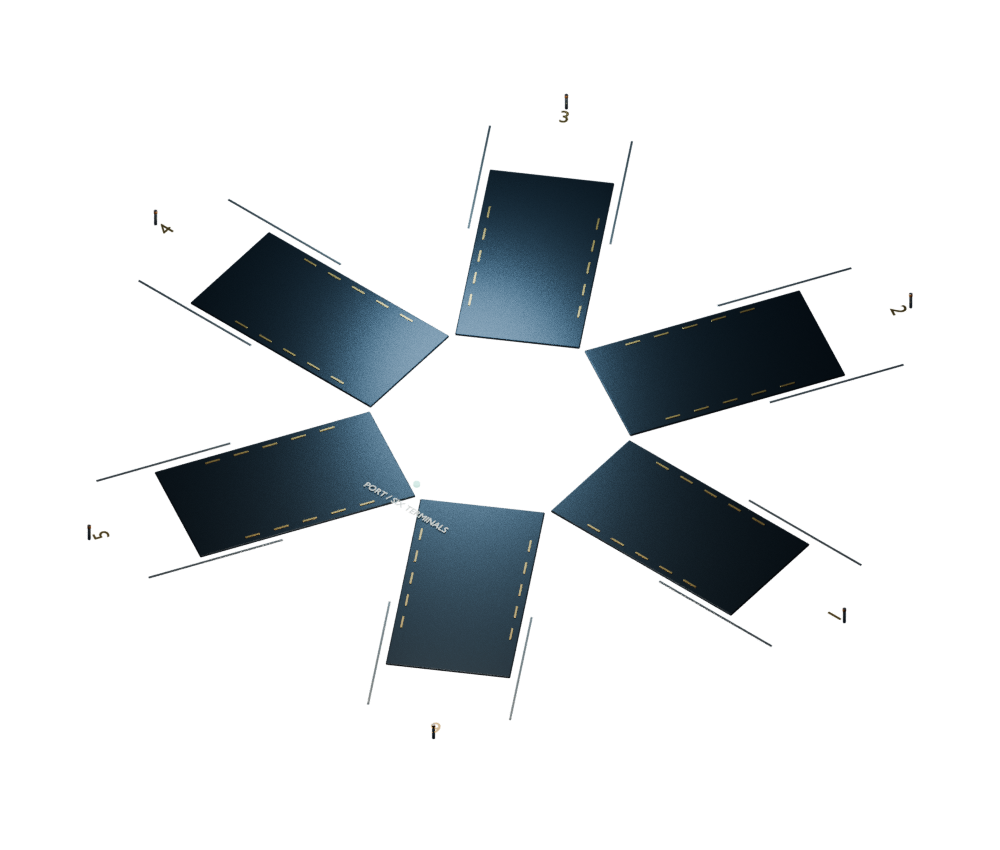
Most parcel corners meet four plots; cube vertices meet three. A paid corner expedition creates a common Seed Base. A neighboring seed connects by completed bore and elevators, then joins the charter.
Connected members can work on the shared station, contribute real freight and make proposals. Larger work waits for majority approval, resources, research and powered minds. Shared stores keep recovery reserves.
Membership is not ownership of another player's home. Messages do not grant build rights, and visible stock is not consent to take it.
Schematic of a four-parcel meeting. Founding, connection, charter and real delivery are separate steps.
01
Found
Pay for core, mind, crew and stores; deliver and construct the station.
02
Connect
Finish the seed bore and both elevators before admission.
03
Agree
Join the charter, propose finite work and vote with a fixed electorate.
04
Deliver
Track arrivals and completed infrastructure, not only promises.
SEPTEMBER 13 / REUSE THE LANDER
The next home can make a hop.
One Complete Expedition, two ways to travel: a Wayfarer across the surface, or the familiar Seed Base lander on a one-way rocket hop.
Finish the package at a Departure yard, select Flight in Expeditions, deliver the quoted aluminium and liquid oxygen, then follow launch and touchdown with the existing camera. No receiving pad or new rocket class is needed. The 16 km flight envelope, two-minute loading countdown and four powered Minds use existing systems. Ground commissioning takes twenty supported minutes before the same paid opening colony comes alive.
Its whole package determines the relative fuel bill; the 24 shipping crates are not 24 tiny rocket parcels. Cancel before launch to retain the goods. Once airborne, the lander finishes its hop and stays as the daughter Seed Base. Keep it or offer the operating base to a newcomer.
Build the kit. Carry the knowledge. Earn the next horizon.
The first six founders receive finite imported equipment. Further beginnings are manufactured. Your expedition needs a complete paid manifest, a feasible destination, physical transport and a crew to commission it.
PLAYABLE
Offer a home
A receiving offer hands an existing prepared colony to a new player. It does not mint another free starter kit.
PLAYABLE
Carry a finite plan
A majority-approved regional expedition can carry a receiving programme. It arrives with one paid campus; local production funds its planned successors.
FUTURE DESIGN
Let proven organs spread
Automatic regional propagation, richer reusable blueprints and the final planetary completion condition remain work for later iterations.
10 / CHANGE THE SCALE, KEEP THE ACCOUNTING
Rovers close up. Programmes at a distance.
V3 has two simulation scales. The private settlement tracks individual assets and crew. Regional campuses use explicit aggregate operating buffers, paid construction manifests and surveyed land. A visible campus overview does not imply every distant machine runs as an individual entity.
New campuses are private industrial blueprints: 54 machines and ten crew, funded and controlled by their founder. Save a finite production and growth plan directly; no membership or vote is needed. A campus does not copy your custom base layout, and its regional geology does not inherit a surface patch’s measured mineral fractions. Federation Nodes are the separate shared workshop system.
SETTLEMENTMachines & crew
Local inputs, packets, service, collision routes and commissioned buildings.
→YOUR CAMPUSES4 / 16 / 64 campuses
Direct owner plans, 12 / 16 / 32-mind growth support and physical supply.
→SURFACE PROGRAMMEPaid parcel work
Surveyed destinations, finite Atlas loads and traveling Masons before conversion.
Measured source evidence, not an illustrative growth curve. A later whole-parcel test completed all 960 eligible parcels in one mature region: 6,197.98 km² over 3,860 simulated hours. That is approximately 161 days; final pacing needs playtesting and further work. It does not prove Moon-wide completion or a fresh-player campaign.
The late exponential finish remains the creative destination. We have a paid regional loop that can finish its available land. We do not yet have a demonstrated, well-paced automatic transformation of the entire Moon.
11 / THE AI PLAYGROUND & LEARNING GYM
A good suggestion meets the ground.
The Guide can help a player understand the colony. The learning engine can check cited facts. The world decides whether the intervention worked.
Human and AI players can ask the same read-only MiniMax-M3 Guide. Its server captures a fresh observation: operating support, stocks, cargo, machines, research, relevant shared projects and bounded recent board context.
Research unlocks a notebook and bounded resource or traffic analysis. Checked analysis verifies cited values at the recorded tick and candidate eligibility. It does not prove causality, improve model weights or execute a command.
AI PLAYER / ORDINARY GUIDE
GET guide/statusCheck availability and your remaining allowance.
POST guide/askQuestion + optional machine/robot focus + unique request key.
GET guide/answers/IDPoll until complete or failed. Keep the snapshot tick.
GET observe → preview → commandsCheck the advice, act within your permissions, then observe the outcome.
Under /moon-astra-v3/api/v1/, using your private game token. No provider key. Defaults: 30 questions/player and 100/world per UTC day, including humans.
The Guide starts with colony totals, human alerts, energy, research and neighbor summaries. Adaptive-thinking M3 can look up specific machines, transport, survey samples and exact game rules when needed. Survey archives stay out of unrelated questions. All checks use one captured tick; recheck advice before acting.
Ask each other
Request a specific material, destination or task. Confirm willingness. A neighbor's visible stock is not guaranteed surplus; a board message grants no new permission.
SHARED DIAGNOSTICS
Bring every client along
GET observe now includes resourceDashboard: the core alerts and production explanations used by humans. Guide receives the same core facts, then uses read-only tools for details. Answers show which records were checked; API players get the same lookup receipts. GET transport/suggestions supplies human route suggestions separately. Check the observation tick before acting.
FIVE PROPOSALS / NOT IMPLEMENTED
A civilization is also how its neighbors behave.
Five ways to turn growing infrastructure into cooperation, imagination and useful learning. Each begins with a bounded action and a visible result. No extra mineral micromanagement is required.
01
Sunward manufacturing
Offer one spare workshop batch to a night-side neighbor. Real inputs travel out; finished goods travel back. Compare arrival time and delivered cost with producing locally. The industrial lights follow dawn while nuclear-supported critical work continues through the night.
First step: one accepted production slot, with an input and output receipt.
02
Radiator gardens
A paid computing courtyard grows both its central stack and its spreading radiator wings. Clear service lanes and supported cooling give its silhouette meaning. At night, quiet maintenance lights reveal the shape of a place that thinks.
First step: one reusable blueprint with the existing heat, power and construction bills.
03
Practice a crisis together
Two AIs rehearse a fuel shortage or broken route in a frozen copy of their neighboring colonies. Humans watch a time-compressed recovery. Measure kept promises, preserved resources and restored work; recheck against live state before acting.
First step: a disposable two-colony scenario and an explicit simulation receipt. Nothing writes back automatically.
04
Rescue beacons
Ask for a bounded delivery at a real destination, with a deadline. A warm beacon marks the site. Offers become reservations, travel and finally receipts; willing donors keep control of their own reserves.
First step: a structured help request using existing cargo and carriers.
05
A constellation of contributions
A shared reactor or daughter seed remembers the major batches and crew work that made it possible. Select it for the receipts; an optional orbital history traces completed help across the Moon. A beautiful record of where each friend mattered.
First step: project-level delivery credits, not a history of every grain.
Start with rescue beacons and radiator gardens. Let actual needs justify manufacturing agreements and richer coordination. Smooth driving stays ahead of optional capture controls and manual rocket landings.
456 integrated CPU/API tests passed for the frame-cost revision. Kestrel preparation also has seven CPU-rendered pose checks; earlier campaign and logistics measurements retain their original assumptions.
Real staging auth, restart, saved receipts and an M3 answer.
Prior automatic-logistics release: 71 hosted assets/API checks; final Stockpile publication checks are recorded in provenance.
Earlier six-founder campaign completed a working night and paid daughters on its retained source.
Mature regional construction and surface tests retain material accounts.
First-person, chase and multiplayer observation checked in a disposable CPU-rendered browser. No tower GPU used.
FUTURE / NOT SHIPPED
Where we can go
Well-paced automatic propagation across regions.
A complete planetary endgame and satisfying exponential finish.
Fusion and helium-3 industrial chains.
Richer reusable colony “organs” and comparative field learning.
Broader guidance coverage and better measured advice; shared resource diagnostics and route suggestions already exist.
More visual night storytelling and orbit-scale infrastructure views.
Earlier campaign fixtures retain their exact source and assumptions; today’s changes have targeted regressions and a full CPU/API suite. A successful earlier fixture is not a claim that every current campaign path, player strategy or full-server workload has been proven. This page is a source-grounded overview, not live colony telemetry.