One amount of computation. Three ways to make it part of the Moon’s skyline.
Each model contains the same 84 cartridges. The small workshop, rover, camera, lighting and portrait scale are identical. This is a comparison of form and growth patterns; these three megastructures are visual proposals, with no live construction recipe or promised performance.
84cartridges in every model
3ways to occupy the horizon
1workshop worth preserving
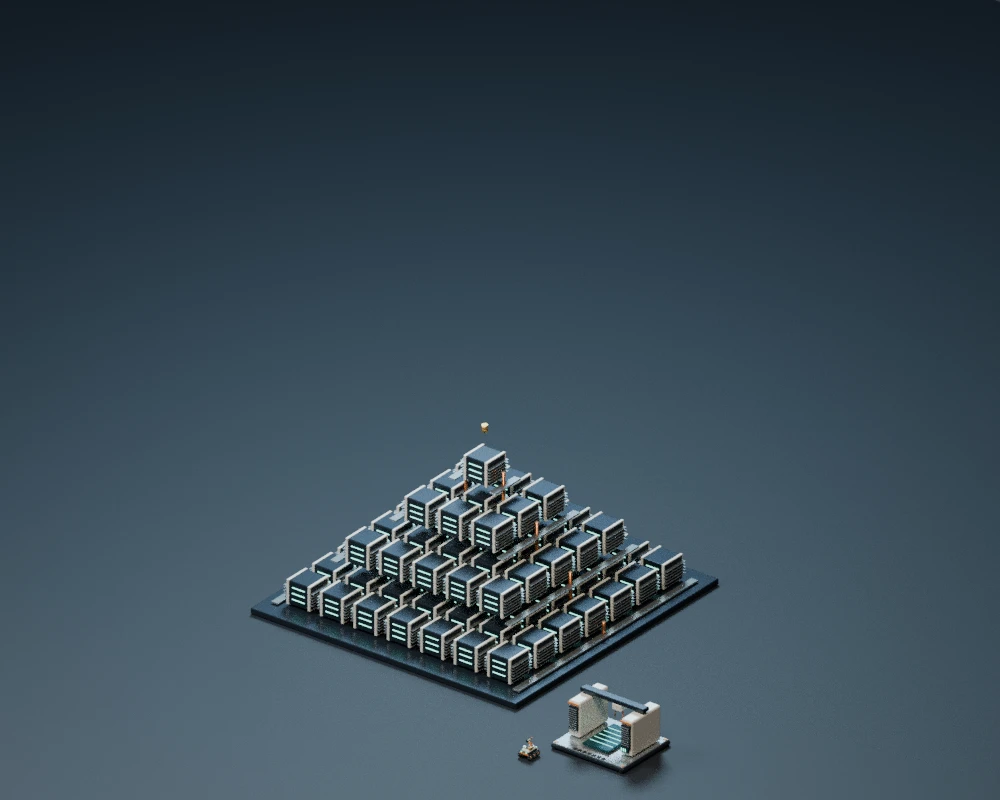
01 / THE PYRAMID
Build the next layer.
Seven by seven, then five by five, three by three, and the last cartridge. Service galleries ring each level. The colony’s progress becomes visible from far away.
Question: how should heat leave the densely packed interior?
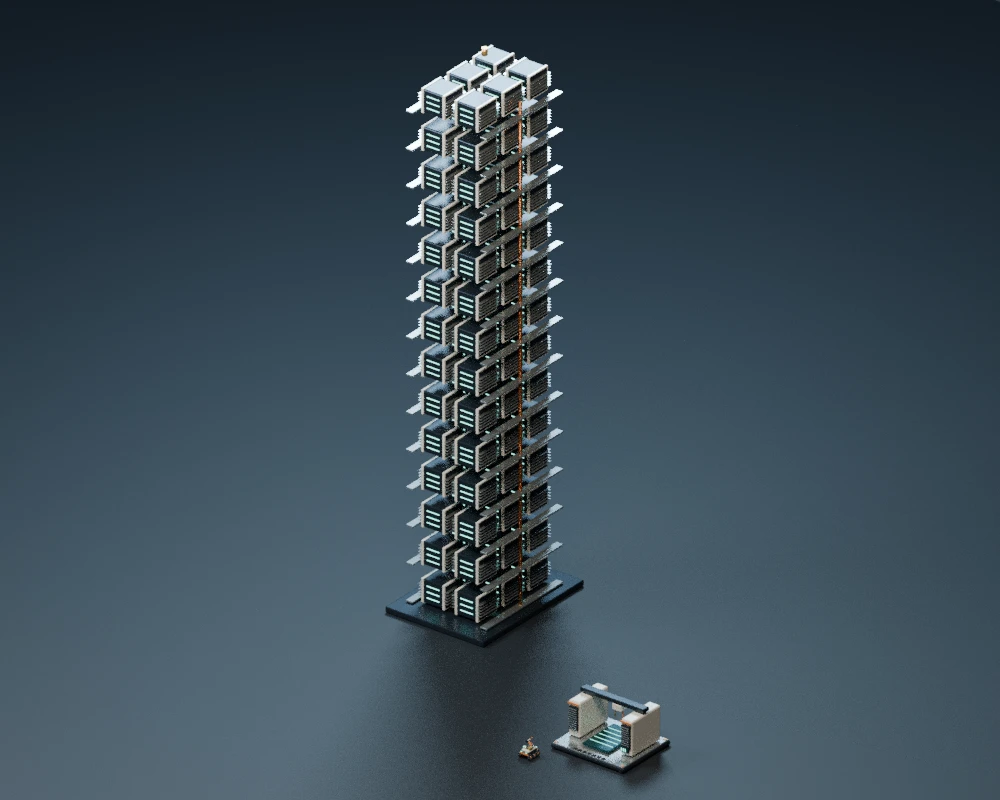
Fourteen levels of six cartridges, separated by open cooling and service gaps. The same investment occupies much less ground and rises roughly three times as high.
Question: can lifting, maintenance and structural support stay simple?
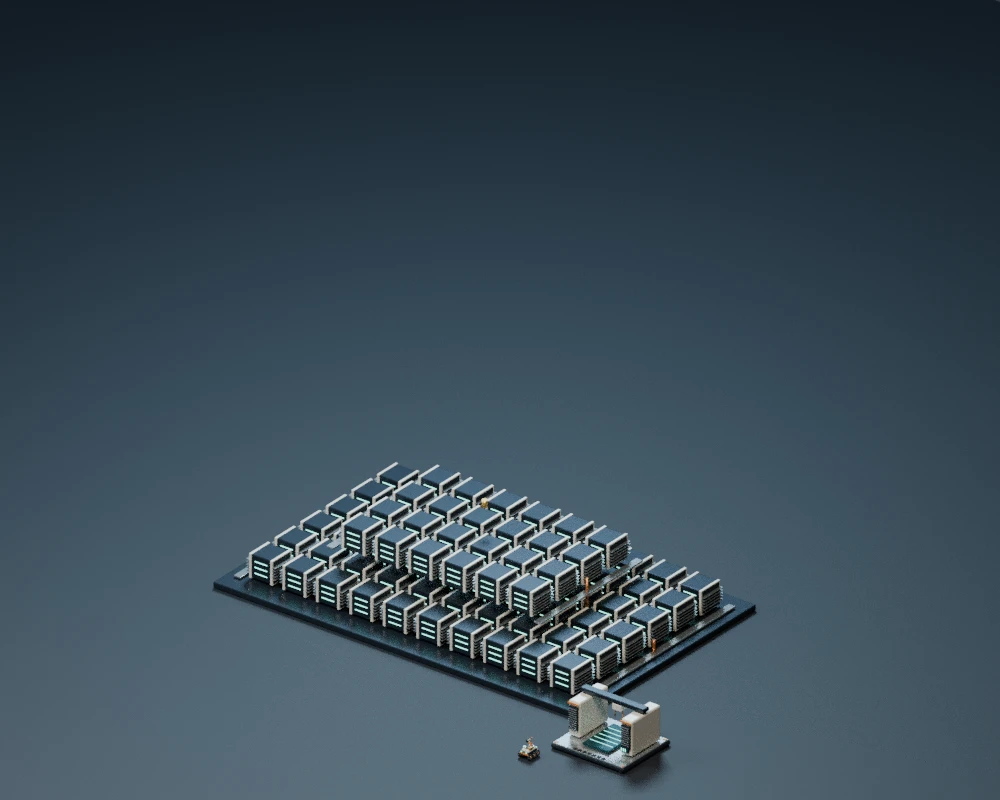
Sixty cartridges on the first level and twenty-four above. A broad field can operate early, preserve service access, and become the foundation of a future pyramid.
Question: how much ground should a growing array reserve?
My recommendation is a single family of modules. Begin with a working row, complete a terrace, and add upper levels as power, cooling and transport can support them. Keep the spire as a distinct silhouette to review. A foundation should not count as intelligence; the visual count should follow cartridges that have actually arrived, been installed, powered and cooled.
The first tiny workshop remains beside the enormous thing it helped build.
Requirement
What should make it real
Construction
Manufactured cartridges, physical delivery, lifting and commissioning.
Power and cooling
Measured demand, exposed cooling paths, lost capability when support goes dark.
Growth
Finite approved stages, paid one stage at a time, with service corridors reserved.
Learning
More supported intelligence permits better planning and larger coordinated projects.
The portraits are CPU renders from editable Blender geometry. The 3D viewer starts only when requested and permits one active exhibit. Detailed review exports are deliberately richer than a future game model; game integration would need geometry instancing and distance-based detail. No thermal, structural or performance certification is implied.
The machinery that brings it closer
The companion transport integration connects Kestrel cargo hops, Coldwell oxygen processing, Good Neighbor’s four kit bays and repair visits, Vesper cooling, and Wayfarer seed convoys. See the development journal for release status and the manual for current rules. A cargo reservation is a commitment; arrival remains physical work.